The Birth of the Clean Water Act
July 2, 2026
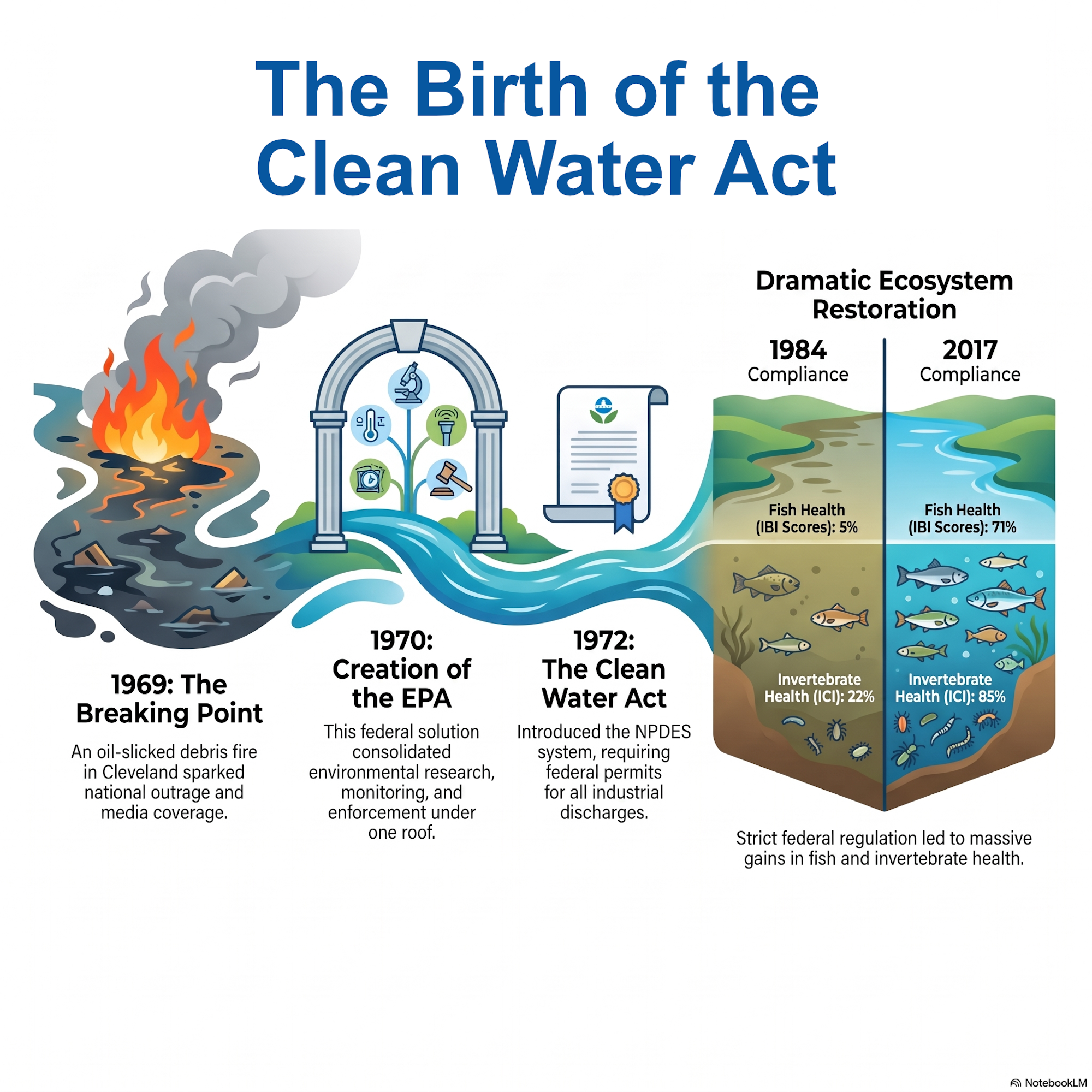
In 1969, the Cuyahoga River Fire captured national attention when pollution and oil floating on the river’s surface ignited. Although the fire lasted only a short time, it highlighted the serious water pollution problems affecting waterways across the United States and sparked growing public demand for action.
In response, the federal government established the Environmental Protection Agency (EPA) in 1970 to oversee environmental protection efforts. Two years later, Congress passed the Clean Water Act, creating stronger protections for rivers, lakes, and streams and establishing the National Pollutant Discharge Elimination System (NPDES) permit program to regulate wastewater discharges.
The South Davis Sewer District plays an important role in carrying out the goals of the Clean Water Act. The District collects and treats wastewater to meet strict permit requirements that regulate what can be discharged into the environment. These permit limits are designed to protect water quality, aquatic life, and downstream users by controlling pollutants and ensuring treated water meets high standards before it is returned to the environment.
Through ongoing monitoring, infrastructure investment, and compliance with regulatory requirements, the District works every day to protect both public health and the environment—helping ensure clean water for our community now and into the future.
