Protecting Public Health Through Evolving Water Regulations

August 11, 2026
Clean water is something many of us rely on every day without a second thought. Behind the scenes, wastewater utilities work continuously to protect public health and the environment by safely collecting and treating wastewater.
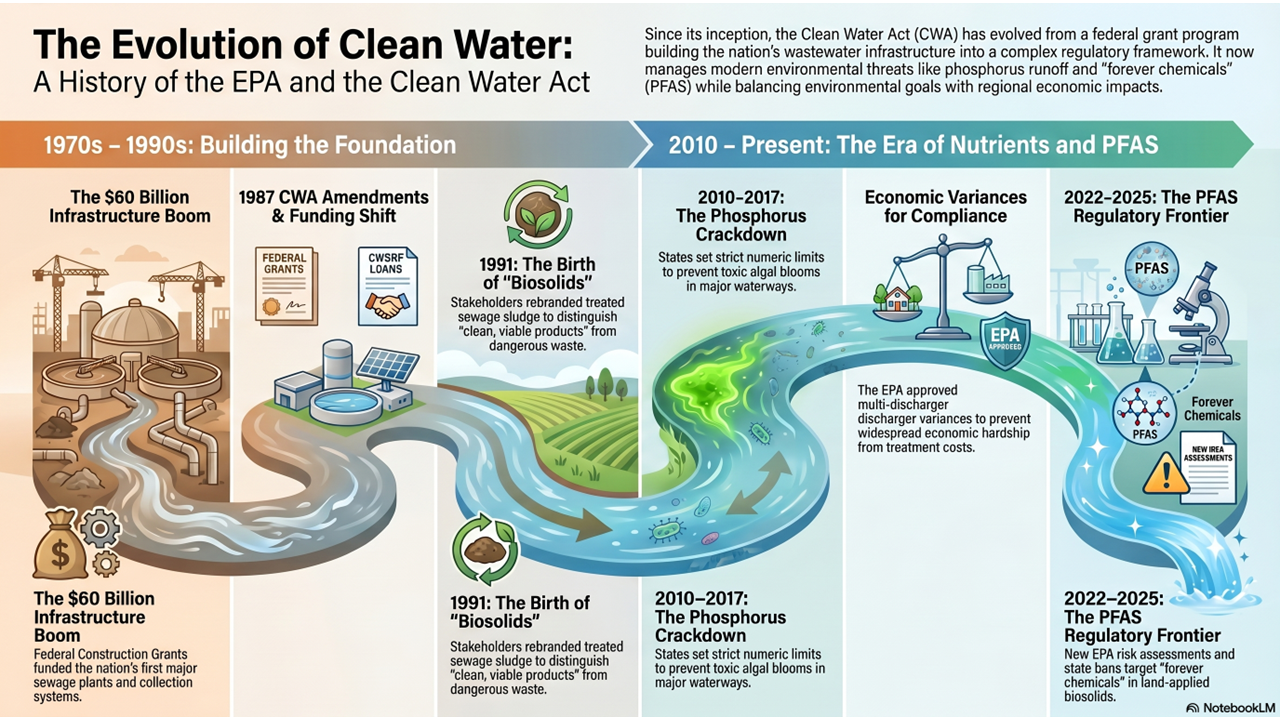
Since the passage of the Clean Water Act in 1972, wastewater regulations have continued to evolve to address new environmental challenges and improve water quality. Over time, treatment standards and permit requirements have become increasingly stringent, requiring utilities to adapt to changing regulations and advances in treatment technology.
In recent years, greater attention has been placed on nutrients such as phosphorus, as well as emerging contaminants like PFAS (“forever chemicals”), which may impact water quality and public health. Addressing these challenges requires additional monitoring, planning, and investment in infrastructure and treatment processes.
The South Davis Sewer District plays an important role in protecting public health and safeguarding local waterways. As regulations continue to evolve, we remain committed to protecting water quality and providing reliable service for our community—today and for future generations.